Bioko (Island / Malabo), Equatorial Guinea
Abalah
Abala
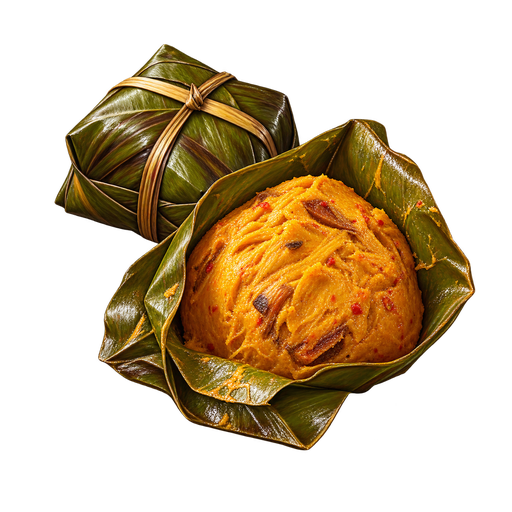
A Bubi dish of crushed taro (malanga) dough mixed with palm oil, wrapped in banana leaves, and cooked; a hearty base for daily meals on Bioko Island.

middle-africa
Explore 33 foods connected to Equatorial Guinea, from everyday staples to rare local specialties.
Start with Abalah →
The local shortlist
11 editor-selected foods for understanding the place through what people eat.
Open the guide →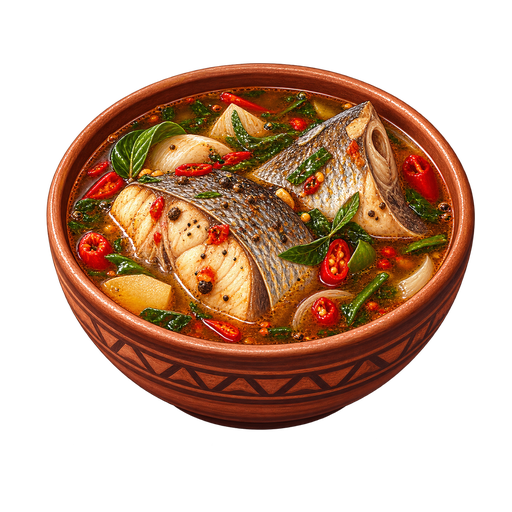
The full directory
33 foods in this view. Filter by category, type, rarity, or search every recorded name.
Bioko (Island / Malabo), Equatorial Guinea
Abala
A Bubi dish of crushed taro (malanga) dough mixed with palm oil, wrapped in banana leaves, and cooked; a hearty base for daily meals on Bioko Island.
Ghana
Àkàrà
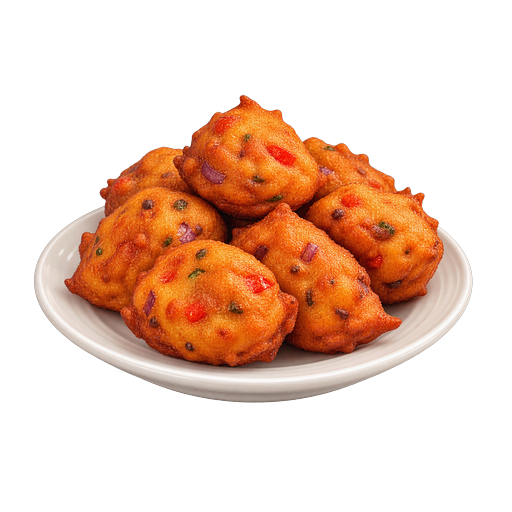
Peeled black-eyed beans ground with onion and pepper, whipped until airy and deep-fried in balls, eaten hot for breakfast with pap or bread.
Central African Republic
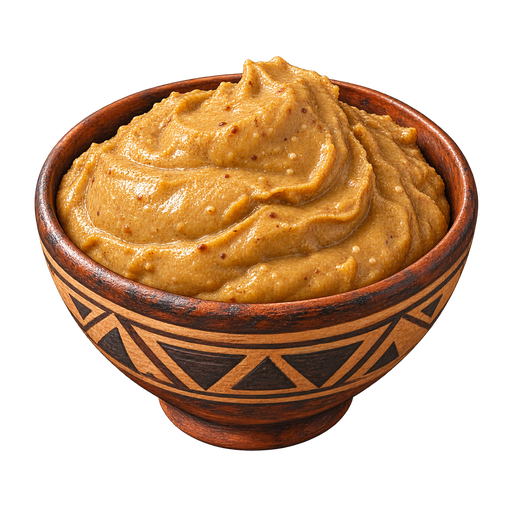
Protein-rich seeds from certain cucurbits, ground into a thickening paste for soups and stews; known as akpakpa in the Central African Republic and used much like egusi across West Africa.
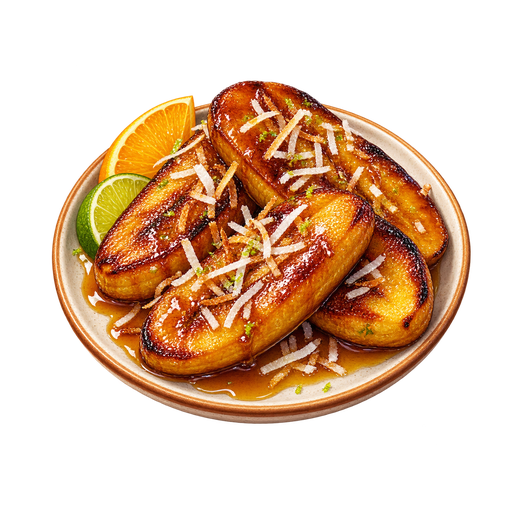
Equatorial Guinea
Baked bananas or plantains doused in melted butter, baked until golden, drizzled with orange or lemon juice, brown sugar, and honey, then topped with shredded coconut; a common breakfast or dessert.
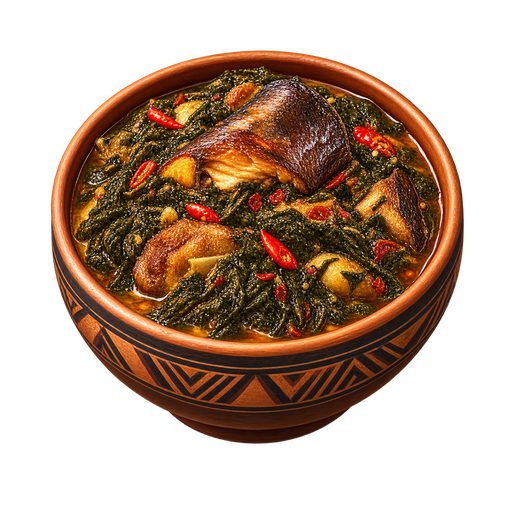
Río Muni Interior (Kie-Ntem / Wele-Nzas / Centro Sur), Equatorial Guinea
Fang signature stew of crushed cassava leaves simmered with palm kernel juice, palm oil, spices, chili, and often smoked fish or meat; the leaves are toxic when raw and must be thoroughly cooked.
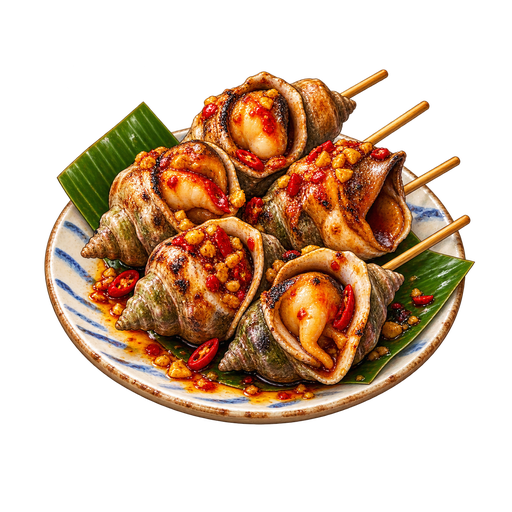
Bioko (Island / Malabo), Equatorial Guinea
Large sea snails grilled on skewers or cooked in garlic-chili oil; more popular on Bioko Island than on the mainland; a coastal delicacy.
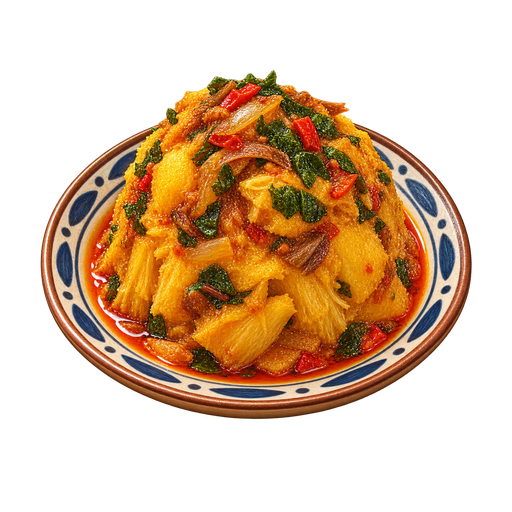
Bioko (Island / Malabo), Equatorial Guinea
A Bioko Island traditional dish of grin/watalif leaves, spinach, chard, eggplant or djakato, smoked fish, sardines, and palm oil; high in nutritional value, especially for pregnant women.
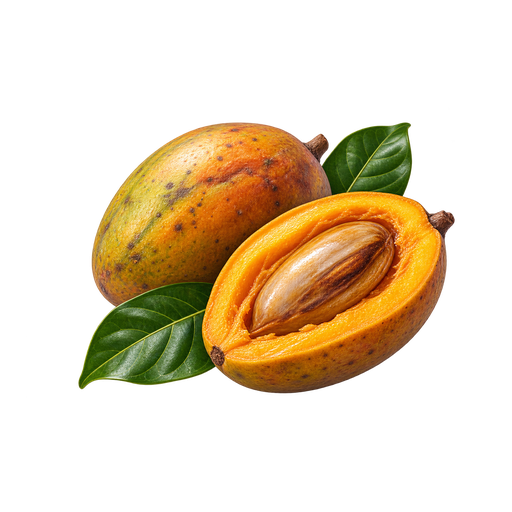
Cameroon
Ndo'o
The dried and ground kernel of the wild mango, used as a thickener that turns sauces glossy and slightly stretchy.
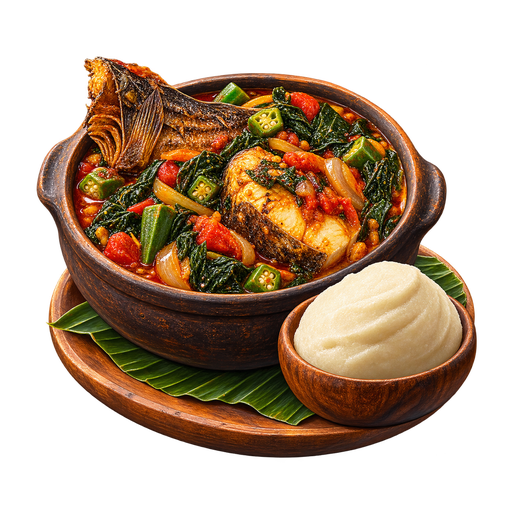
Angola
Dried fish and fresh fish cooked together with okra, sweet potato leaves, gimboa, tomato, onion and palm oil into a dense stew.
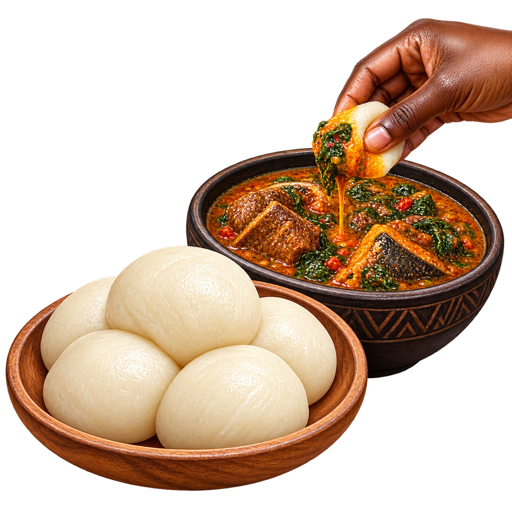
DR Congo
Fufu
The staple food of the Congo — a smooth, dense, slightly elastic dough made from cassava flour, corn flour, or sometimes plantains; rolled into golf-ball-sized balls and dipped into stews; the proper way to eat it is to pinch off a piece with the right hand, indent with the thumb, and scoop up sauce; present on all Congolese tables from north to south; the universal accompaniment.
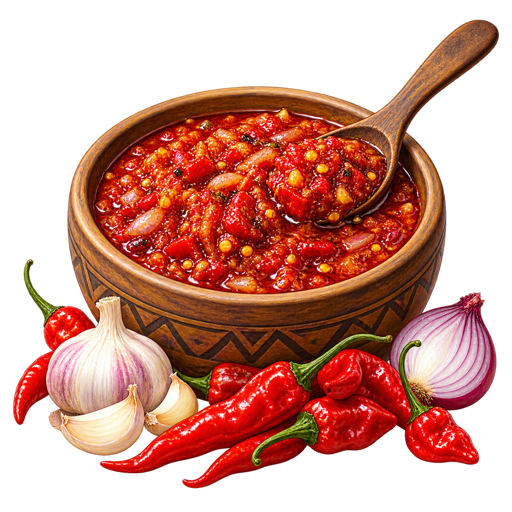
DR Congo
Pili pili
A very hot chili pepper sauce served with nearly everything in the Congo; made from pili-pili peppers, onions, garlic, and oil; occasionally dried and sprinkled on fruit; the Congolese condiment that adds fire to any dish; listed in Wikipedia's Congolese cuisine; the heat of Central African cuisine; found at every table and street stall.
DR Congo
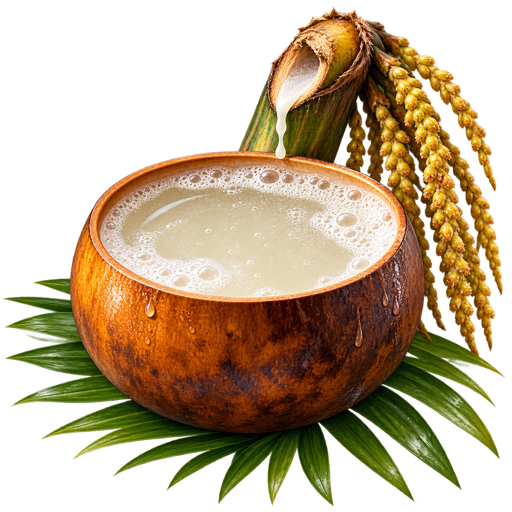
Malafu
Palm wine made from the sap of a wild palm tree, fermented by natural yeasts; has an alcohol content of between five and seven percent; listed in Wikipedia's Congolese cuisine; a traditional beverage across Central Africa; the sap is collected from cut palm flower stems and ferments naturally; a refreshing, slightly sweet drink; the traditional alcohol of the Congo.
Equatorial Guinea
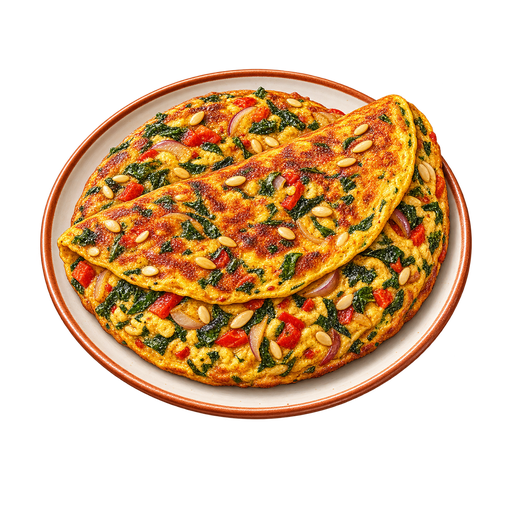
Tortilla de calabaza
A Spanish-style omelette fusion with African egusi (pumpkin) seeds in the batter, cooked in groundnut or palm oil with onion; a uniquely Equatoguinean fusion dish.
Nigeria
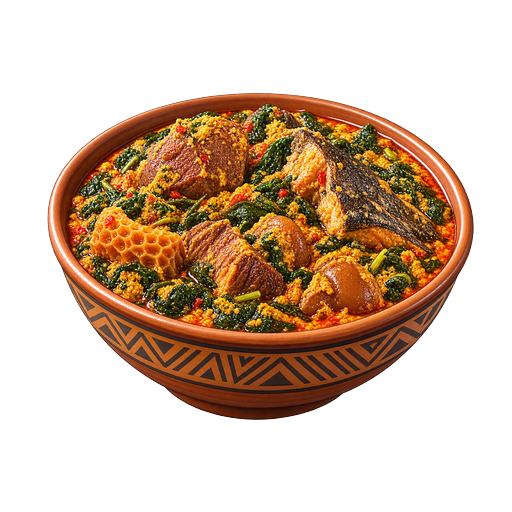
Egusi
Ground melon seeds cooked in palm oil with pepper, leafy greens and assorted meat or fish until the seed sets into soft lumps in the oil.
Equatorial Guinea
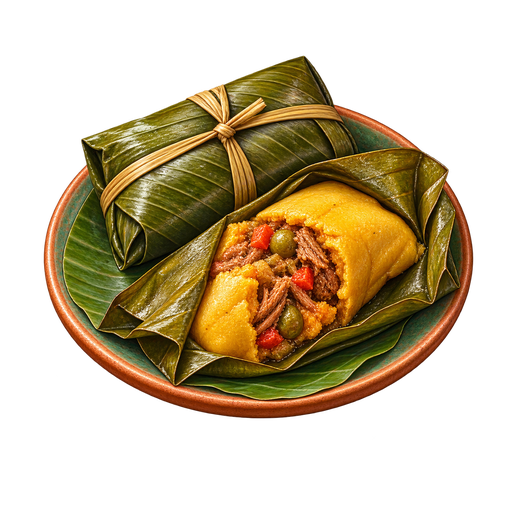
Starchy doughs from cassava or plantain, sometimes mixed with ground fish and chili, shaped into oblongs, wrapped in banana leaves, and boiled; a portable accompaniment to sauces and stews.
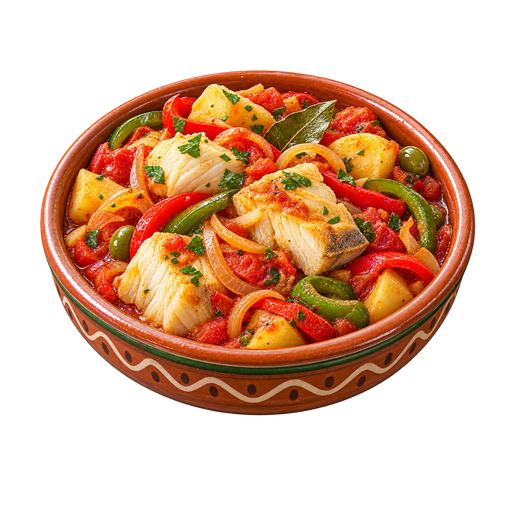
Equatorial Guinea
Bacalao
Salted and dried cod, a Spanish colonial legacy; soaked to desalinate then used in stews, soups, and with vegetables; a common ingredient in Equatoguinean kitchens.
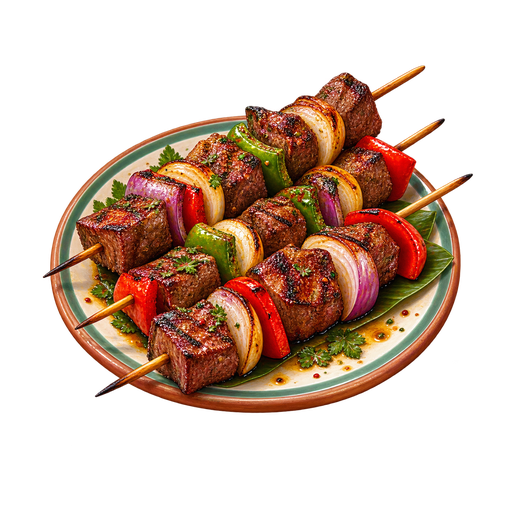
Malabo, Equatorial Guinea
Pinchos
Grilled skewers of chicken, beef, or fish on sticks over open flames, served with a spicy dipping sauce; the Spanish-African street grill of Equatorial Guinea.
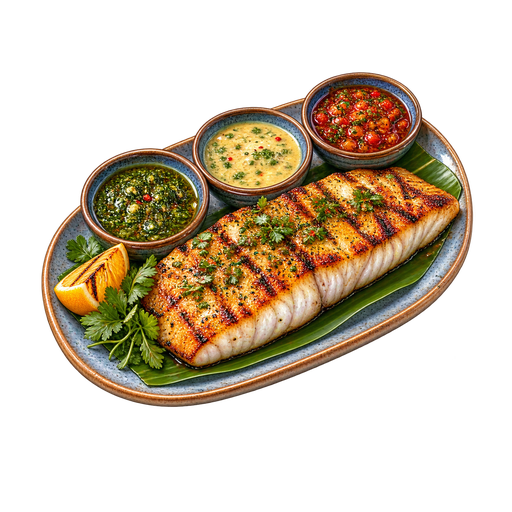
Annobón (Island), Equatorial Guinea
Sopa de pescado con tres salsas
Fish (mackerel, tuna, or swordfish) served with three sauces: spinach sauce, avocado sauce, and peanut sauce; a specialty of Annobón Island; a TasteAtlas-listed dish.
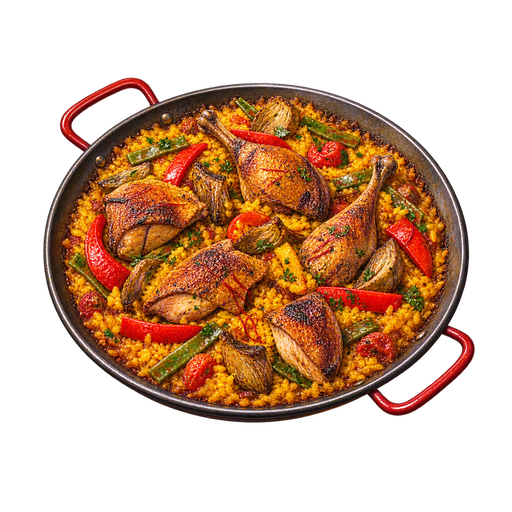
Equatorial Guinea
Paella de pintada
A one-pot rice dish with guineafowl breasts, chicken stock, tomato sauce, black-eyed peas, oregano, paprika, cayenne, and turmeric; a Spanish-African fusion unique to Equatorial Guinea.

The Gambia
Bissap
Dried hibiscus calyces steeped with sugar, mint and sometimes orange-blossom water into a deep red drink served ice-cold.
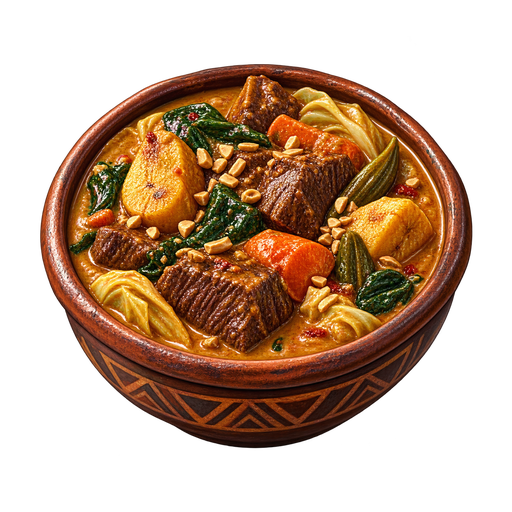
Equatorial Guinea
A stew of lamb or beef browned in oil then simmered in a sauce of water, peanut butter, and tomato; served with white rice; a hearty Equatoguinean comfort dish.
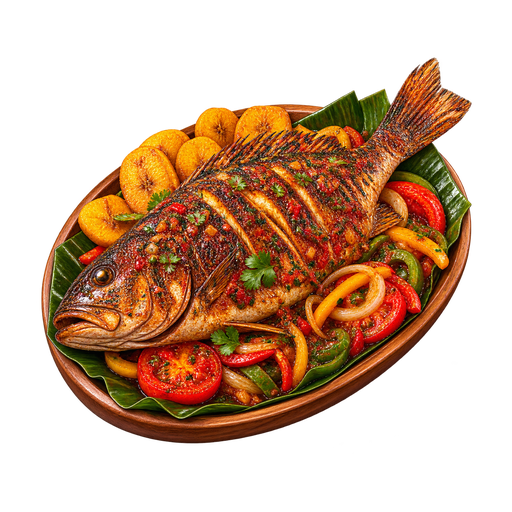
Equatorial Guinea
Smoked catfish in a spicy sauce; the fish is soaked or boiled first, then cooked in a fiery preparation with peppers, onions, and palm oil; a Fang dish.
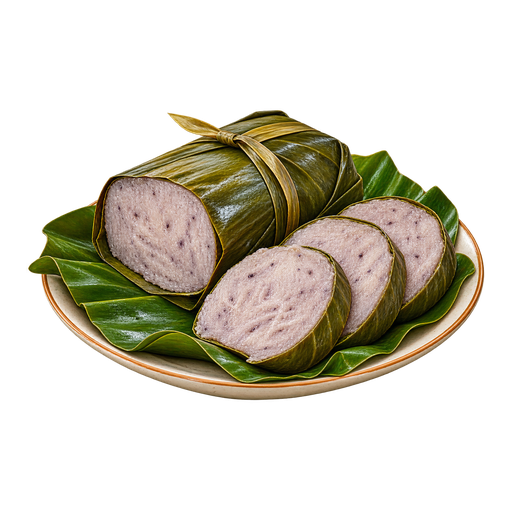
Cameroon
Grated cocoyam mixed with palm oil, wrapped tightly in banana leaves and steamed into a firm loaf, sliced to eat with mbanga soup.
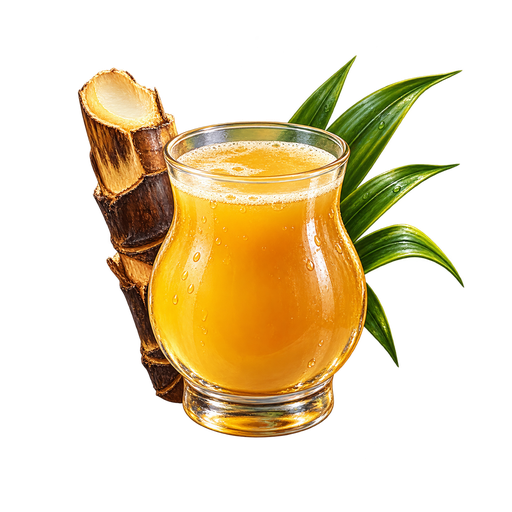
Equatorial Guinea
A traditional alcoholic beverage made by fermenting sugarcane juice for about two weeks; similar to Latin American guarapo; sometimes Garcinia kola bark or corn is added to accelerate fermentation.
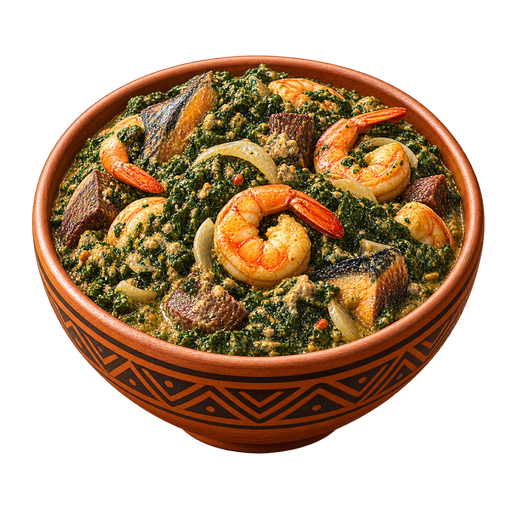
Cameroon
Ndole
Bitterleaf boiled and washed repeatedly to draw out the bitterness, then cooked with ground peanuts, crayfish, beef, smoked fish and pork rind into a thick green stew.
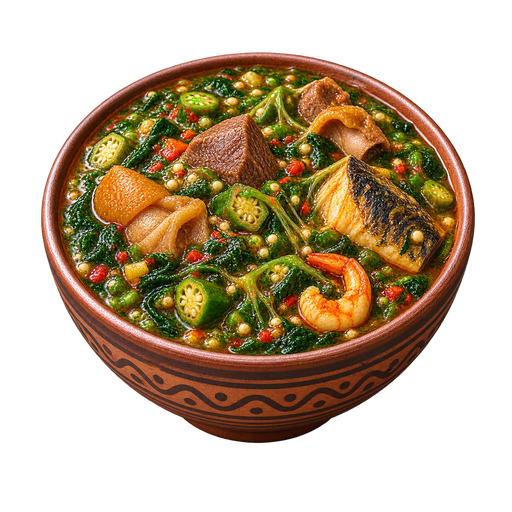
Bioko (Island / Malabo), Equatorial Guinea
Ocrosoup
A viscous okra soup typical of Bioko Island, with palm oil, onions, chili, and fish or meat; served with boiled cassava, rice, taro, yam, or plantain.
Equatorial Guinea
Pepesup
The national signature dish of Equatorial Guinea: a spicy fish soup with white fish, tomatoes, onions, garlic, ginger, Scotch bonnet peppers, and palm oil; the broth is fiery and aromatic.
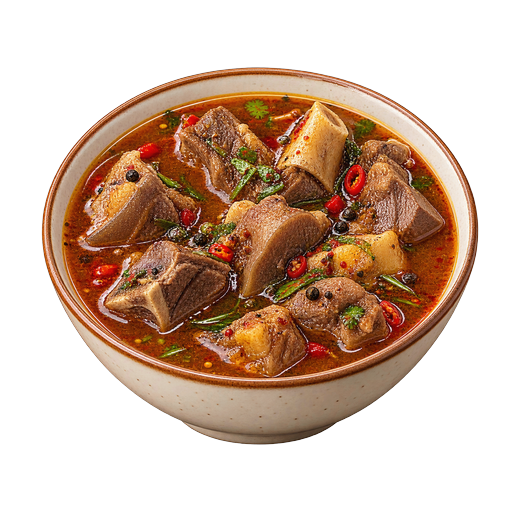
Liberia
Thin, fiery broth of goat, catfish or chicken spiced with uda, uziza seed and calabash nutmeg, drunk as much as eaten.
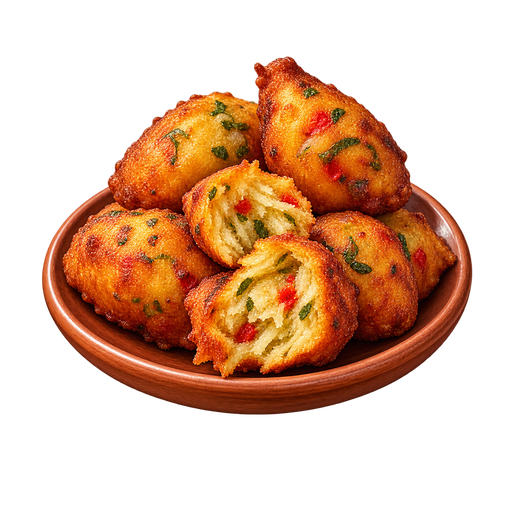
Annobón (Island), Equatorial Guinea
Annobonese bread made from grated yam or cassava mixed with coconut milk, wrapped in banana leaves, and baked or steamed; variants include white, red (with palm oil), and coconut.
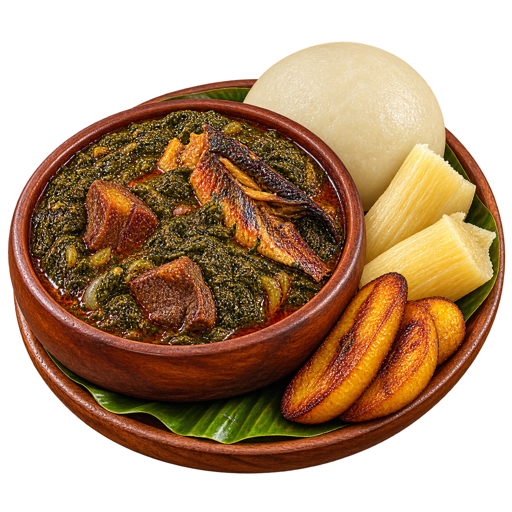
DR Congo
Saka saka
The beloved national staple of the Congo — cassava leaves pounded into a fine paste and slow-cooked for hours with palm oil, onions, garlic, and often smoked fish or beef; rich in protein, vitamins, and minerals; the palm oil gives a characteristic reddish-brown color and nutty flavor; served with fufu, chikwangue, or plantains; the backbone of daily Congolese dining.
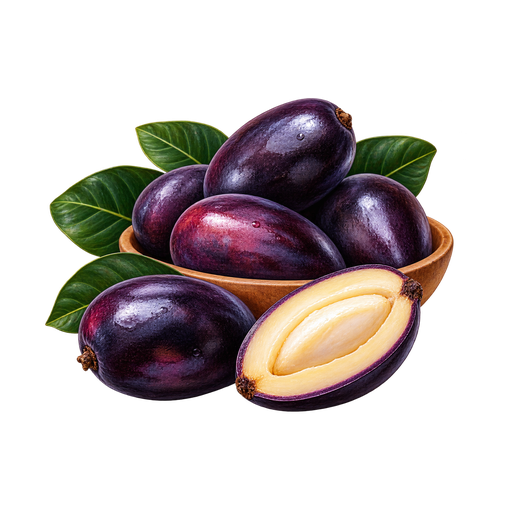
Republic of the Congo
A purple-black oily fruit roasted or dipped in hot water until the flesh softens into something between avocado and olive, eaten with maize.
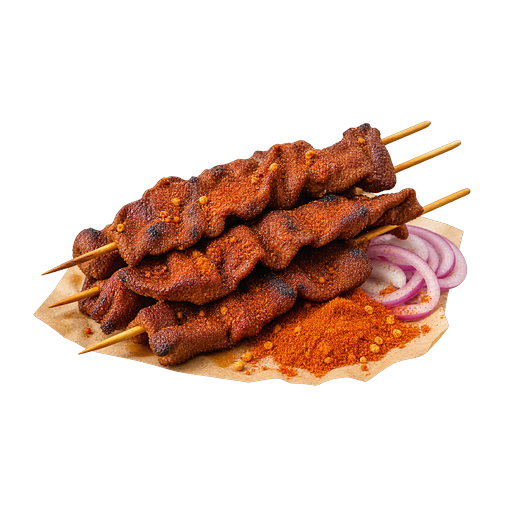
Niger
Thin strips of beef threaded on sticks, coated in yaji — a groundnut, chilli and spice rub — and grilled over open coals, then dusted with more yaji.
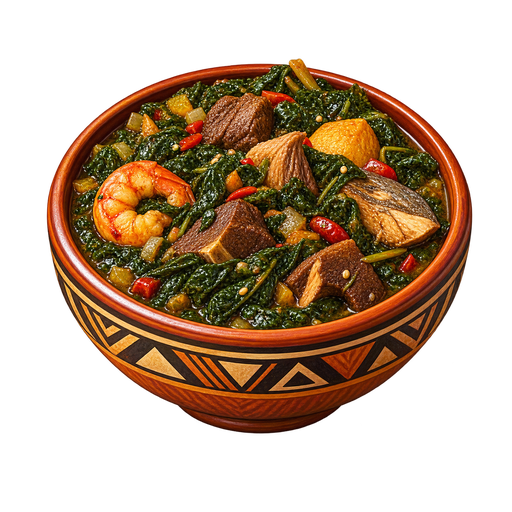
Equatorial Guinea
Stewed fish with vegetables (carrots, eggplants), ginger, hot peppers, and chicken bouillon; served on white rice mixed with mashed okra; variations use beef or chicken.