
Insects
Mixiote de escamol
Mexico

Escamoles, edible ant brood, cooked with herbs and seasonings in a parcel made from the thin, parchment-like membrane of a maguey leaf. The wrapped filling is gently steamed.
 Insects

A closer look
 A closer look
What to look for.
An opened papery bundle containing small ivory escamoles with herbs and pieces of onion or nopal.
Geographic connections
Places and
traditions.
Explore the places connected to Mixiote de escamol, from possible origins to local traditions.
Mexico
A cultural connection; not necessarily its birthplace
Keep exploring
More foods to discover.
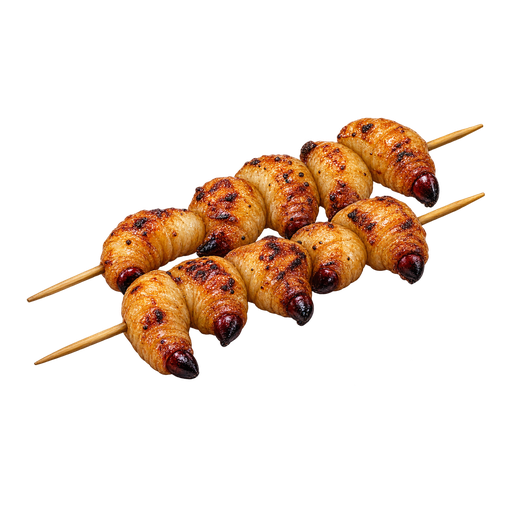

Loreto, Peru

Anticuchos de Suri
Amazonian palm-weevil larvae, known as suri, grilled on skewers and associated with Loreto food markets.
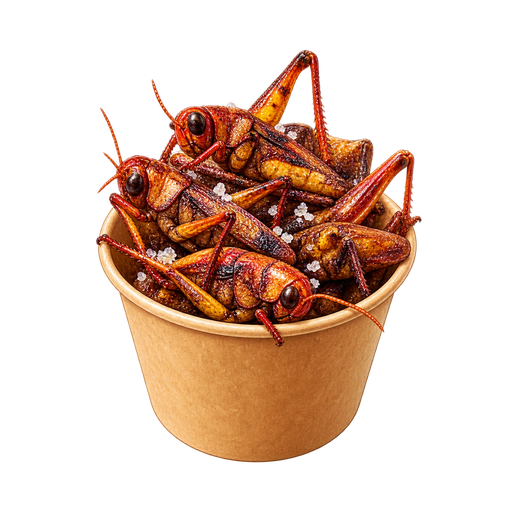
Angola

Palm Grasshoppers
Gafanhotos de palmeira
Grasshoppers gathered from palm trees, toasted with salt and eaten by the handful or served with game meat.
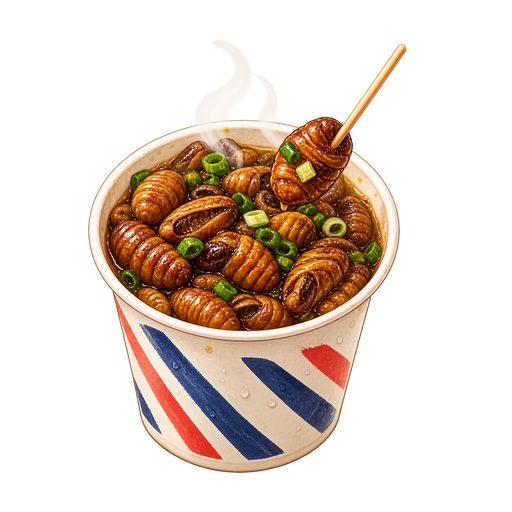

South Korea

Beondegi
번데기
Steamed silkworm pupae sold in paper cups from street carts, known for their savory aroma and soft, slightly chewy texture.
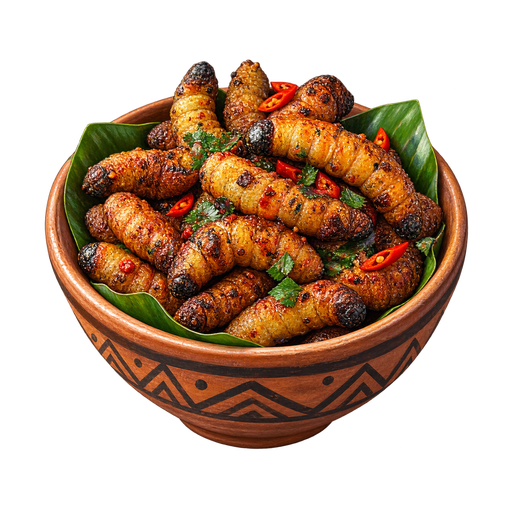

Angola
Catatos
Edible caterpillars prepared as food in Angola, including fried preparations with garlic and accompaniments such as rice or funge.
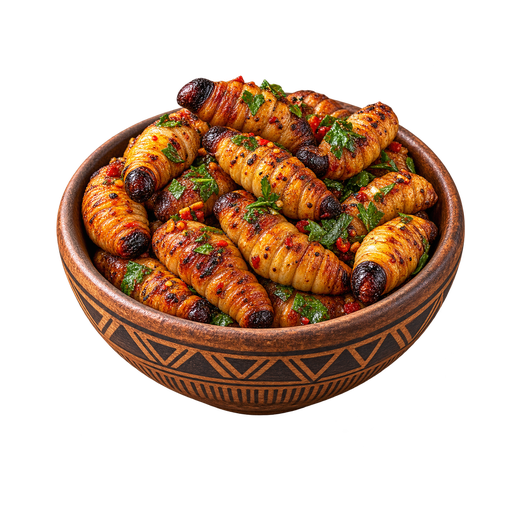
Haut-Ogooué (Southeastern / Franceville), Gabon

Gabonese Caterpillars
Chenilles
Edible Parotis baldersalis caterpillars gathered from Tabernaemontana crassa trees on the Batéké plateaux; local preparations include larvae or pupae boiled in water.
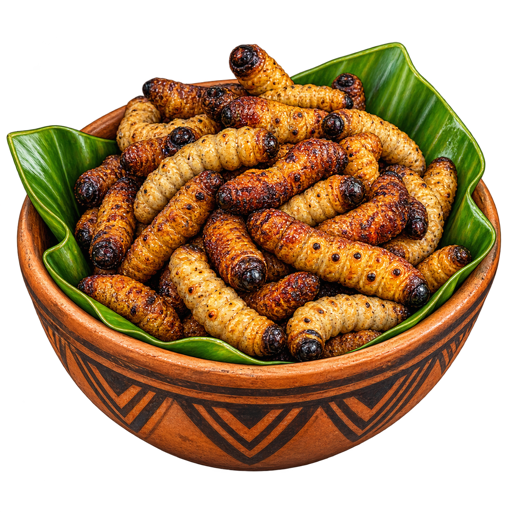
Burkina Faso · Guinea
Chitoumou
Shea tree caterpillars eaten around Bobo-Dioulasso, Burkina Faso, fresh during the rainy season or preserved for later use. They may be fried, cooked in sauce, dried or powdered.

Ecuador

Chontacuro
Edible palm-weevil larvae prepared in Ecuador’s Amazon, including grilled skewers, leaf-wrapped maitos and raw preparations.
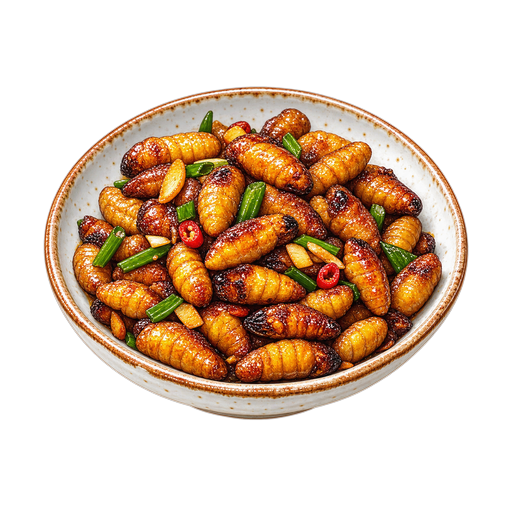
Yunnan, China

Fried Bee and Wasp Pupae
油炸蜂蛹
Bee or wasp pupae fried until golden and lightly crisp, a regional food in Yunnan. They may be seasoned with salt, chillies or pepper and served as a savoury accompaniment to drinks or rice.